27 Nerds

Portfolio / StreamAdvisor — Landing Page Design for a Streamer Collaboration Platform

StreamAdvisor — Landing Page Design for a StreamerCollaboration Platform

Company
StreamAdvisor
Duration
4 months
Team
4 members
Product Domain
SaaS onboarding & product clarity system

Quick project snapshot

We audited and restructured Strafe’s SEO foundation to unlock scalable organic growth without rebuilding the product — focusing on technical fixes, content architecture, and structured data improvements.

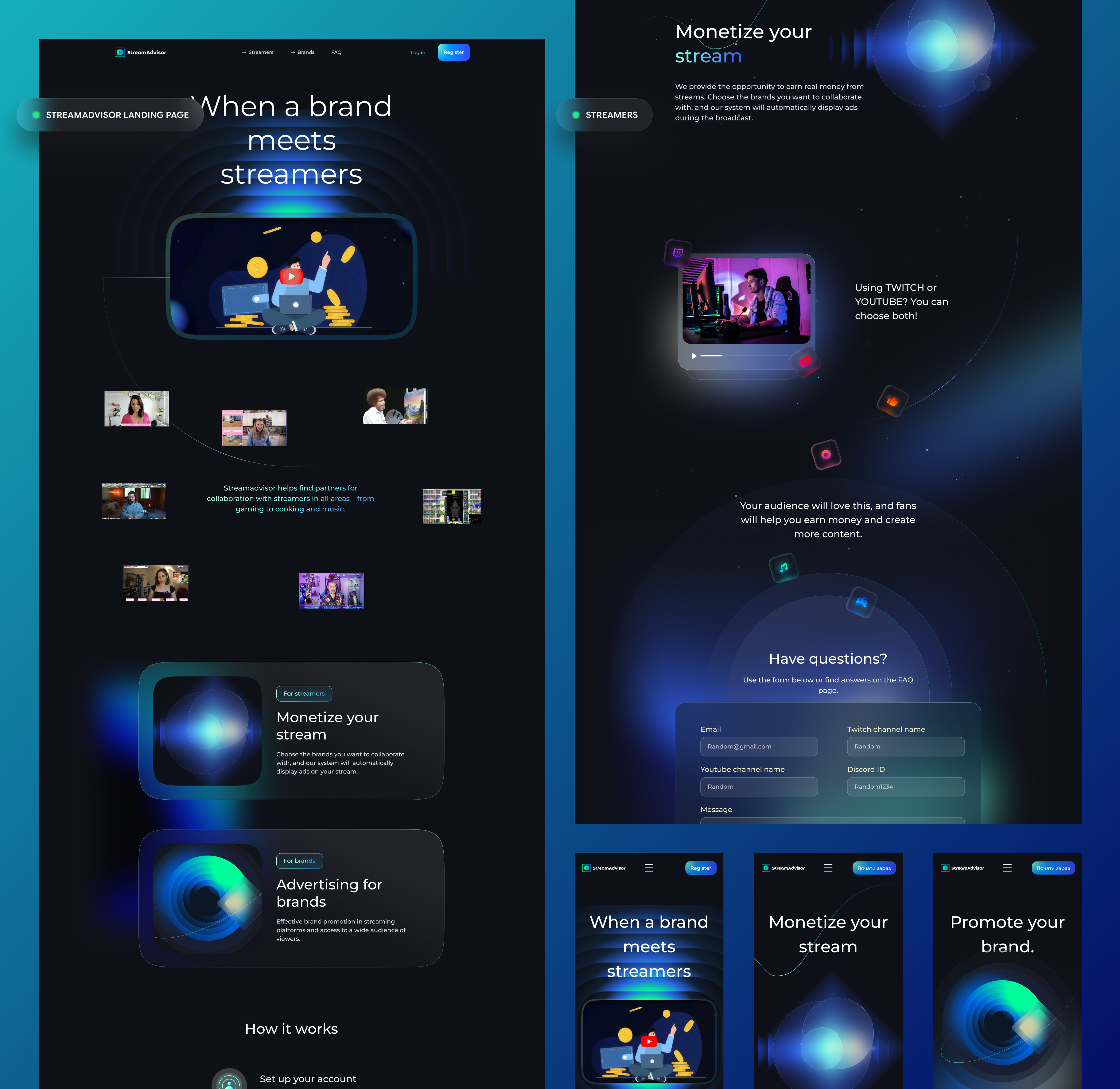
Dual-audience landing page (brands + streamers)
01
Motion-driven UI to improve engagement and perception
02
Clear value communication for partnerships and monetization
03
Fully responsive design across desktop and mobile
04
Performance-optimized animations and interactions
05

What needed fixing

StreamAdvisor had a strong concept but lacked a conversion-ready web presence:

[ PROBLEM ]

  1. No landing page

    Value proposition was not clearly communicated

  2. Dual-audience complexity

    Brands and streamers needed distinct messaging

  3. Low brand trust potential

    Weak design risked reducing credibility

  4. Limited engagement

    Static presentation failed to capture streamer attention

  5. Performance risks

    Heavy animations could impact speed and trust

  6. Cross-device consistency

    Required aligned mobile and desktop experiences

Without a strong landing page, the product struggled to build credibility and drive sign-ups.

main image
secondary image

What we aimed for

[ GOAL ]

  • Dual-value messaging

    clearly communicate both audiences within one structure

  • Credibility-first design

    establish trust through modern visual hierarchy

  • Performance-safe motion

    use animation to enhance, not distract

  • Cross-device consistency

    ensure a unified desktop and mobile experience

  • Conversion-focused UX

    balance visual impact with clarity and action focus

How we solved it

We structured the page around a dual-audience flow within a single linear narrative.

[ Key principles ]
  • [ 01 ]

    Dual-audience information hierarchy

    guided brands first, then streamers in one coherent structure

  • [ 02 ]

    Functional motion design

    used animation to guide attention and reinforce UX structure

  • [ 03 ]

    Performance-first animation system

    optimized motion from the outset to avoid tradeoffs

  • [ 04 ]

    Native responsive architecture

    built cross-device behavior as a core system, not an adaptation

  • [ 05 ]

    Clarity over visual noise

    balanced visual ambition with readability and conversion focus

What we built

[ SOLUTION ]

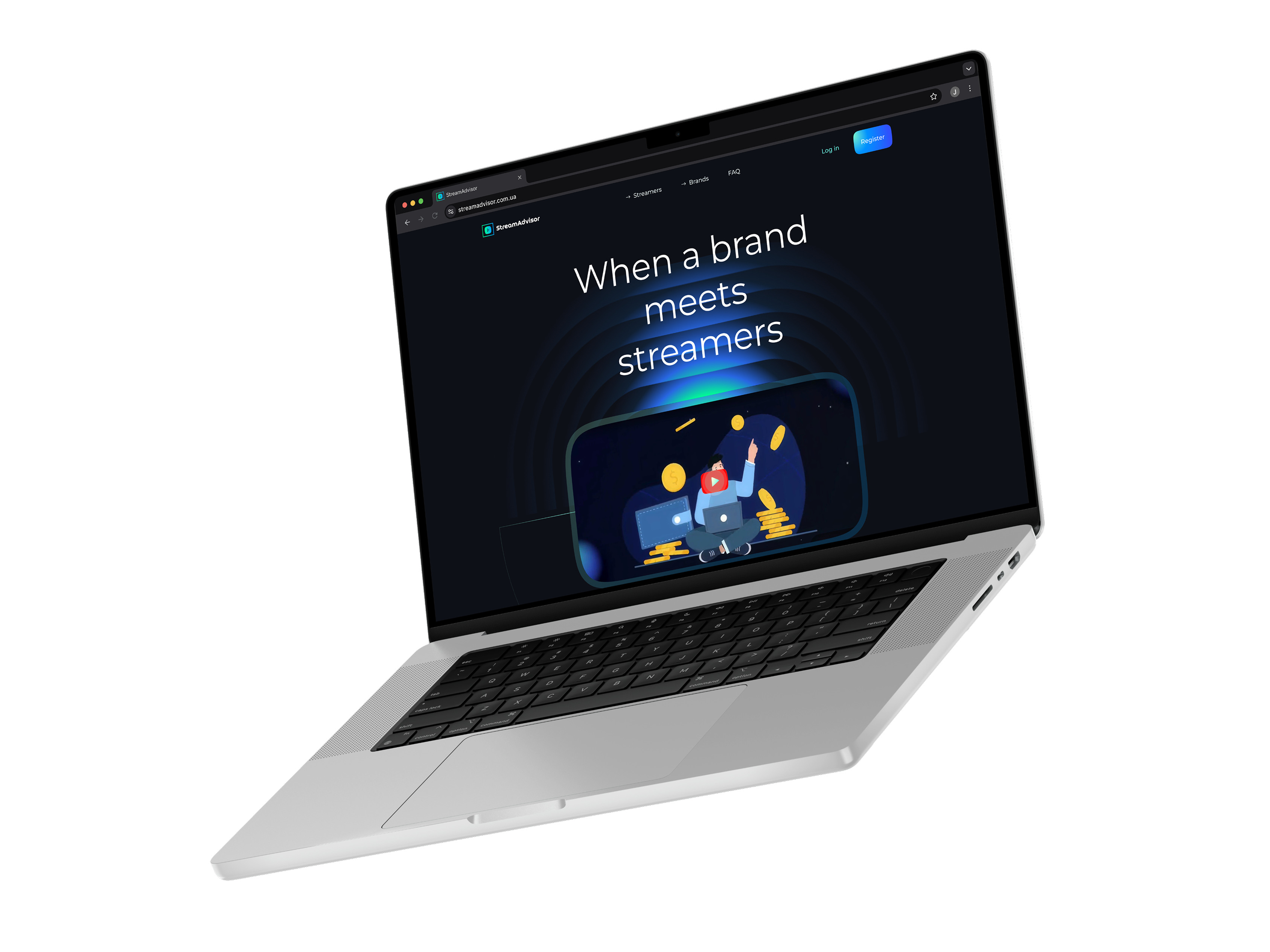
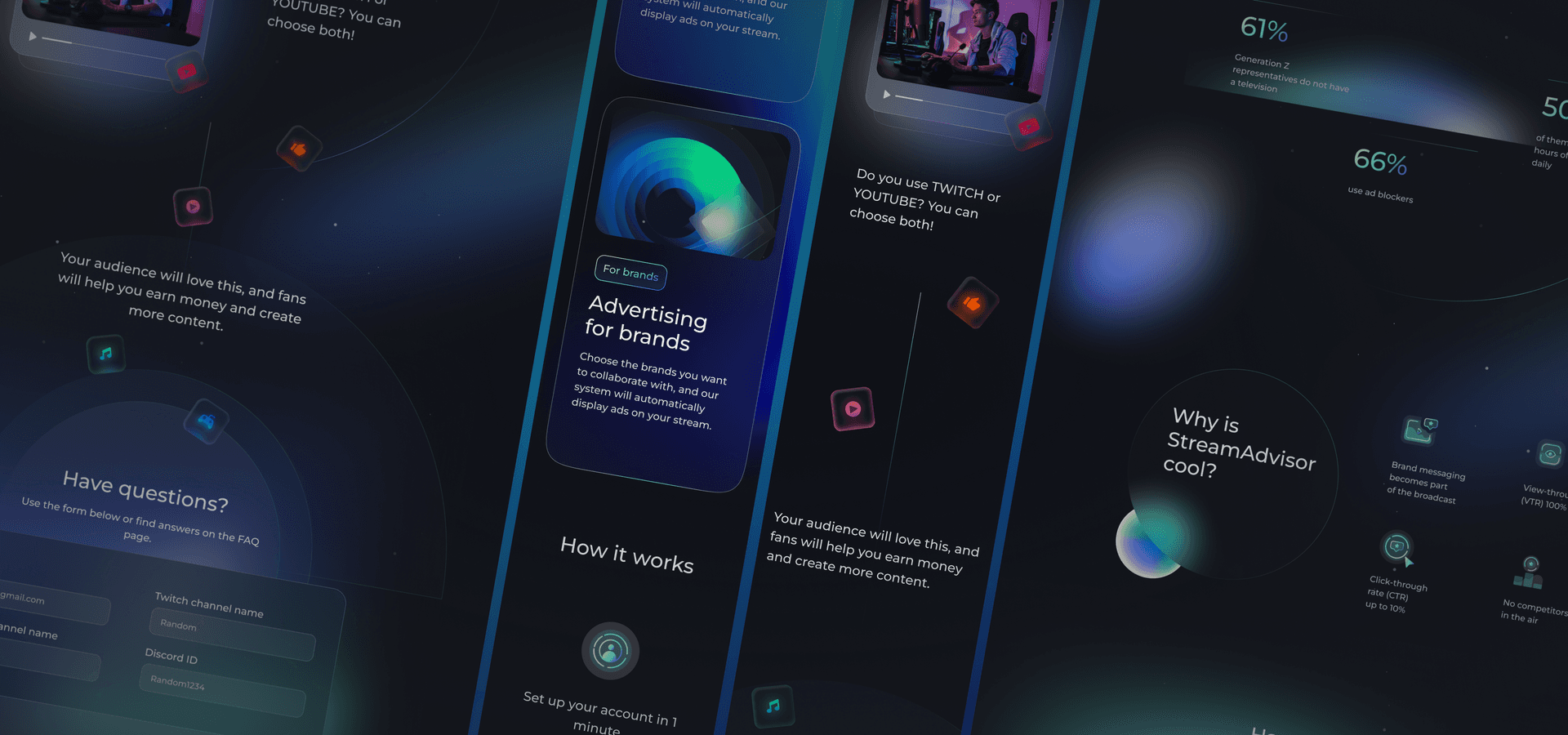
  1. Modern Animated Landing Page

    Modern Animated Landing Page
    • Full-page design with smooth, purposeful motion system
    • Visual storytelling aligned with platform positioning
    RESULT

    Strong first impression and elevated perceived product quality
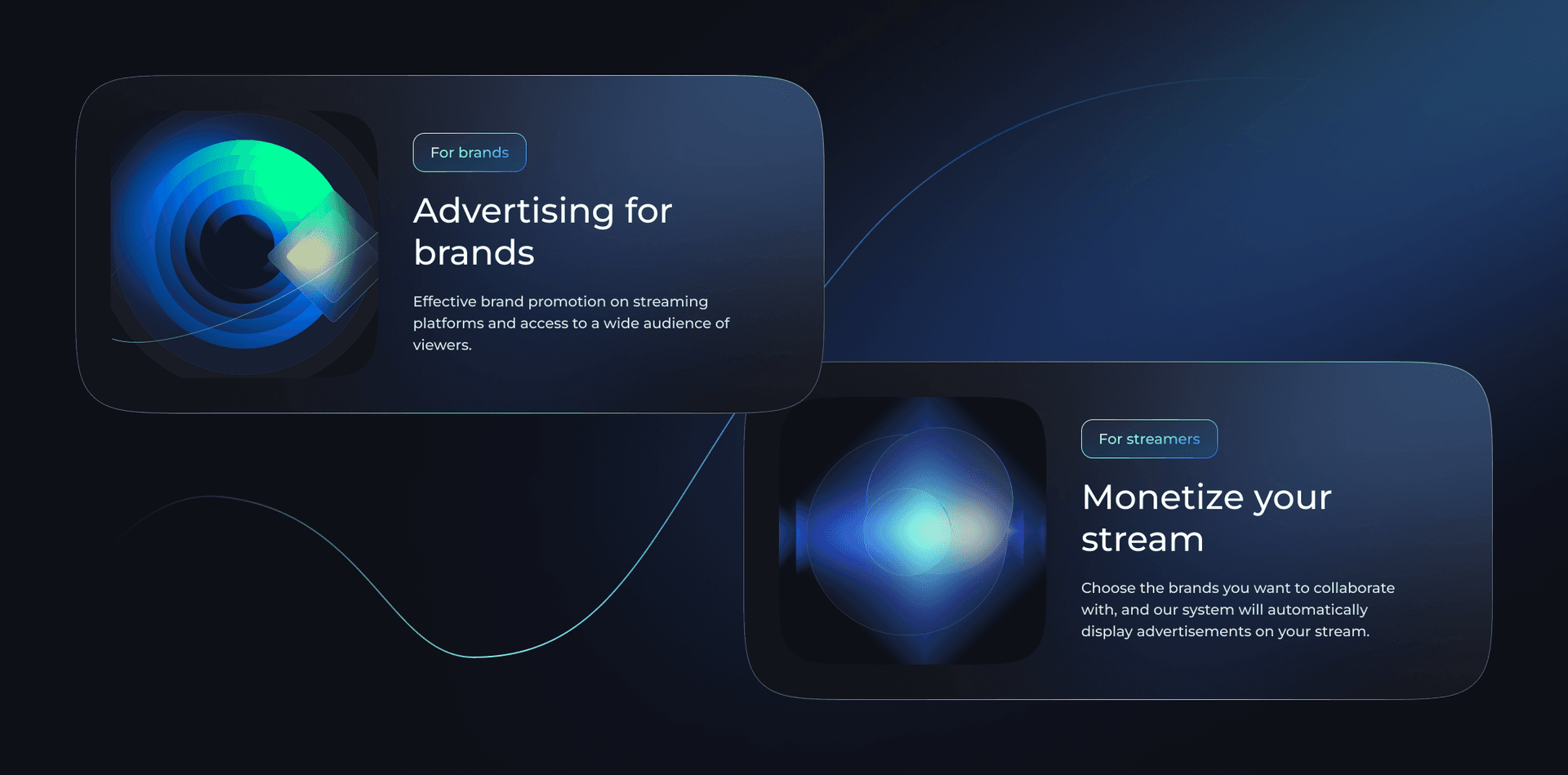
  2. Dual-Audience UX Structure

    Dual-Audience UX Structure
    • Separate value paths for brands and streamers within one flow
    • Clear segmentation without breaking page continuity
    RESULT

    Both audiences immediately find relevant messaging
  3. Performance-Optimized Motion System

    Performance-Optimized Motion System
    • Lightweight animations engineered for fast load times
    • No impact on rendering performance across devices
    RESULT

    High visual quality without speed tradeoffs
  4. Responsive Cross-Device Design

    Responsive Cross-Device Design
    • Layout and typography adapted for mobile and desktop
    • Interaction consistency across screen sizes
    RESULT

    Stable UX regardless of entry device

  5. Brand Credibility Layer

    Brand Credibility Layer
    • Premium visual direction aligned with creator economy standards
    • Design focused on trust-building for partnership acquisition
    RESULT

    Stronger platform credibility for brands and streamers

Results

Business impact

01

Establishes credible first touchpoint for both brands and streamers

02

Improves perceived platform trust and professionalism

03

Increases engagement through motion-driven UX

04

Reduces friction in understanding platform value proposition

05

Provides strong foundation for marketing and acquisition efforts

[ Technical results ]
  • Animations implemented with no measurable impact on load speed
  • Fully responsive layout validated across devices
  • Performance optimization integrated into design system from the start
  • Clean frontend structure ready for future iteration

Team and tools

[ TEAM & TECH ]

Delivered by a team of UI/UX designers and frontend developers with experience building high-performance, visually driven landing pages for two-sided platforms and creator economy products.

  1. UI/UX Design

  2. Motion Design & Animation

  3. Responsive Frontend Development

  4. Performance Optimization

  5. Cross-Device Testing

  6. Figma

Related work

[ FEATURED CASES ]

  1. Campaign & Data-Driven Platform Development

    GG.BET - Campaign & Data-Driven Platform Development

    Built a system for managing large-scale streamer campaigns and sponsor integrations - turning fragmented processes into a scalable product.
    • Centralized campaign management across multiple streamers
    • Integrated real-time data and reporting systems
    • Automated sponsor banner rotation and delivery
    • Reduced manual operations and improved scalability
    • Enabled consistent execution of multi-streamer campaigns
  2. UX for Creator Platform & Engagement Layer

    Snoodyboo - UX for Creator Platform & Engagement Layer

    Designed a platform that aggregates creator content and improves interaction beyond streaming platforms.

    • Structured content into a centralized, user-friendly platform
    • Improved discoverability of guides and content
    • Integrated Twitch data into website experience
    • Enhanced creator engagement and brand presence
See all case studies

Start with an AI prototype

See how your feature, flow, or idea works in practice — with real logic, data, and interaction.

Turn your idea into a working product concept in 2–3 days — validate logic, features, and user flows before investing in full development.

  1. Align on product structure and scope
  2. Test core ideas with real interactions
  3. Validate before committing budget