27 Nerds

Portfolio / Dragoni — UX & Product Design for a P2P Esports Betting Exchange

Dragoni — UX & Product Design for a P2P EsportsBetting Exchange

Company
Duration
18 months
Team
3 members
Product Domain
Esports UX system & design infrastructure

Quick project snapshot

We led UX strategy and product design for Dragoni — a peer-to-peer esports betting exchange — restructuring IA around explore, create, and compete flows , simplifying bet creation and management, and adding gamification for long-term engagement.

Clear IA built around explore → create → compete model
01
Simplified bet creation and management flows
02
Designed end-to-end P2P betting user journeys
03
Introduced gamification and social engagement layer
04
Consistent cross-platform UX across all devices
05

What needed fixing

P2P betting lacked a clear, scalable UX structure to manage its inherent complexity:

[ PROBLEM ]

  1. Navigation structure gaps

    explore, create, and compete lacked clear hierarchy

  2. High-friction bet creation

    excessive steps led to drop-offs before completion

  3. Inconsistent participation flows

    joining and managing bets varied across contexts

  4. Missing engagement layer

    no gamification or social mechanics to drive retention

  5. Cross-platform inconsistency

    desktop and mobile experiences were misaligned

  6. No progression system

    lacked competition, growth, or community dynamics

UX friction reduced usability and engagement.

main image
tertiary image
secondary image

What we aimed for

[ GOAL ]

  • Action-based information architecture

    explore → create → compete user flow structure

  • Simplified bet creation

    reduce complexity and friction across all scenarios

  • Clear participation flows

    intuitive joining and bet management experience

  • Engagement layer

    gamification and social mechanics for retention

  • Cross-platform consistency

    unified experience across desktop and mobile

How we solved it

We started with structure over visuals — the platform was organized around three core actions: explore, create, compete.

[ Key principles ]
  • [ 01 ]

    Information architecture-first approach

    structured around explore → create → compete with clear hierarchy and navigation

  • [ 02 ]

    Bet creation optimization

    reduced complexity in the highest-friction flow while preserving flexibility

  • [ 03 ]

    Integrated gamification layer

    embedded competitive and social mechanics into core actions

  • [ 04 ]

    Cross-platform consistency

    ensured unified behavior across desktop and mobile

  • [ 05 ]

    Engagement loop design

    reinforced repeat usage through competition-driven retention mechanics

What we built

[ SOLUTION ]

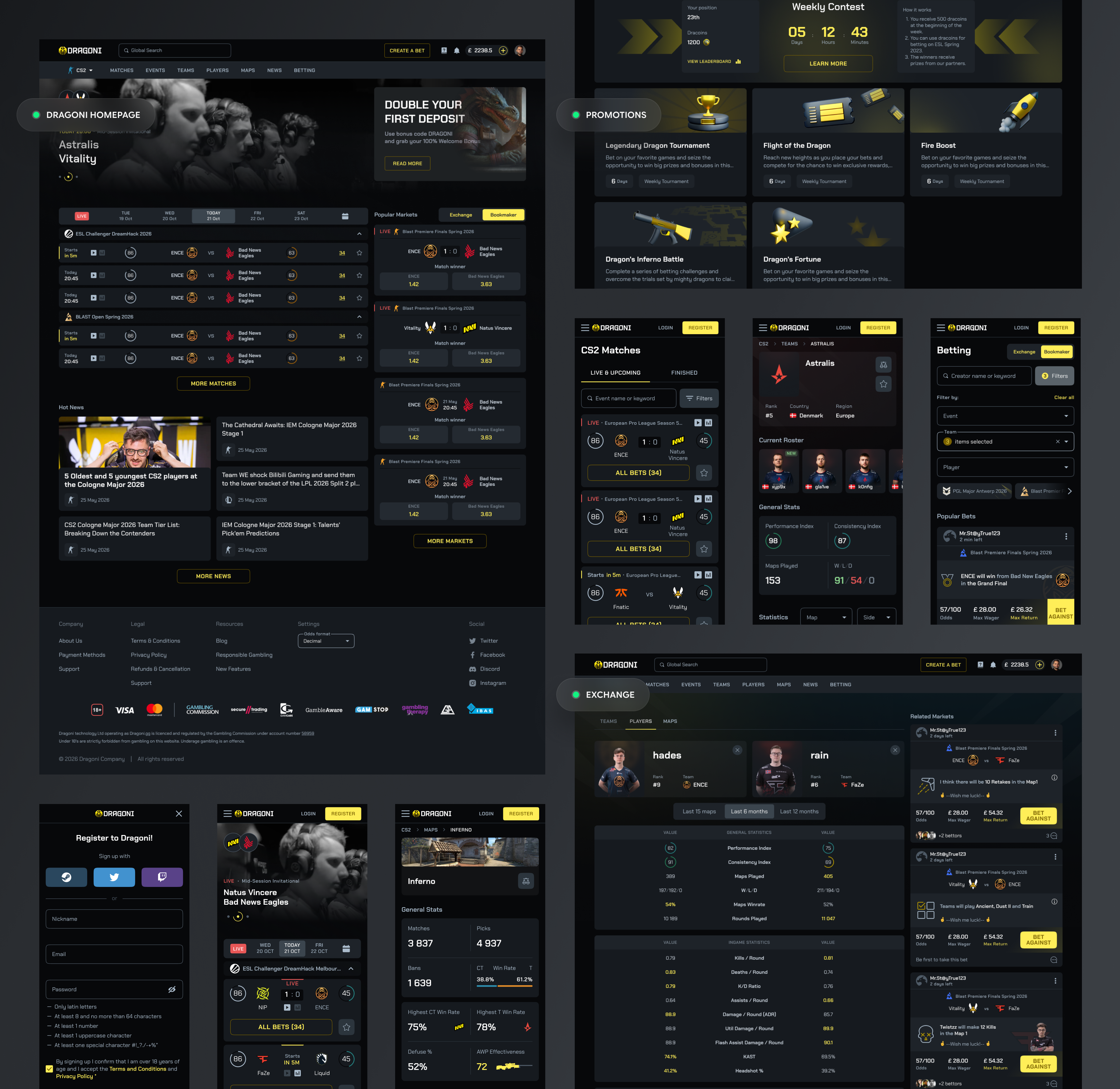
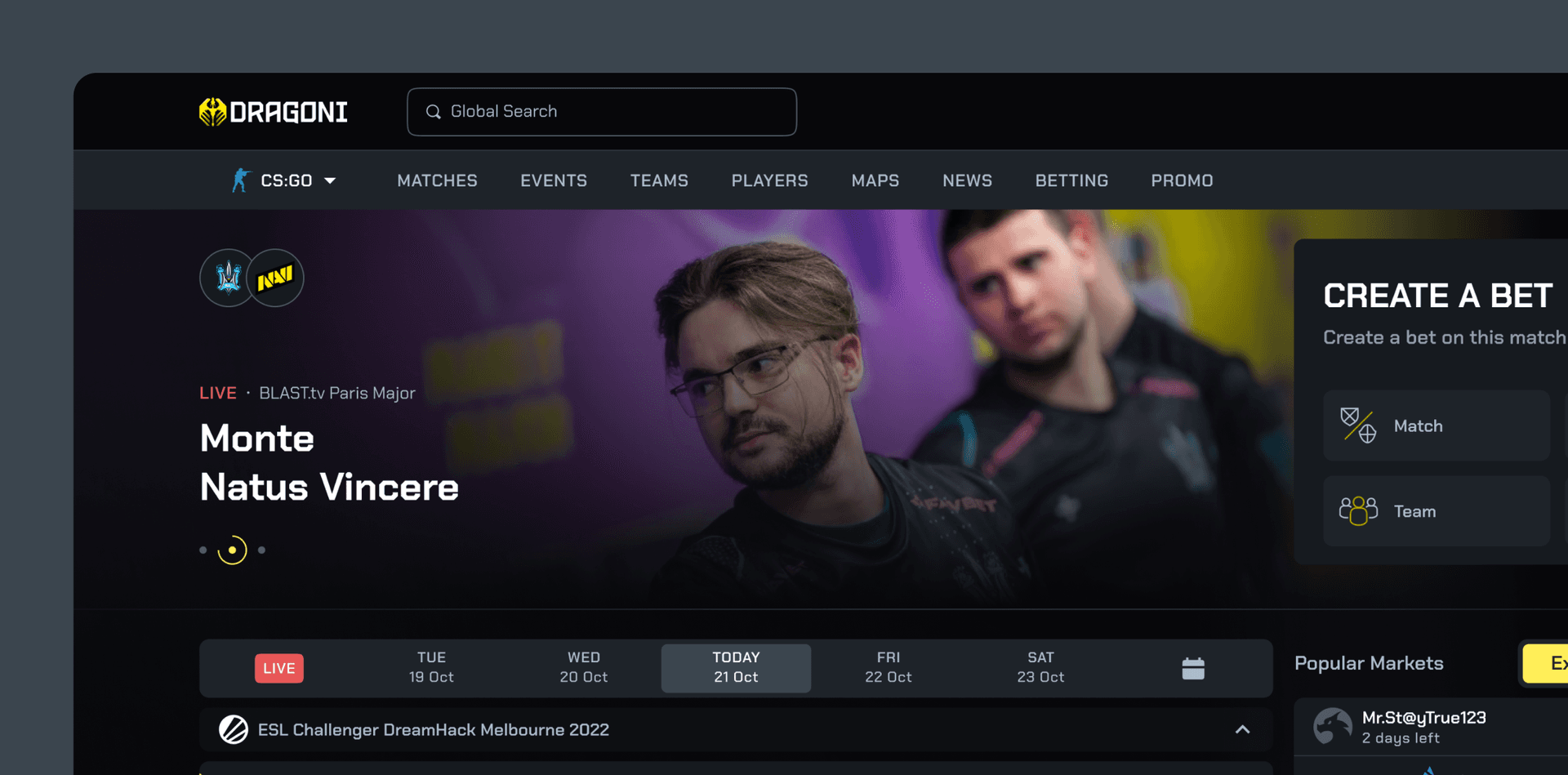
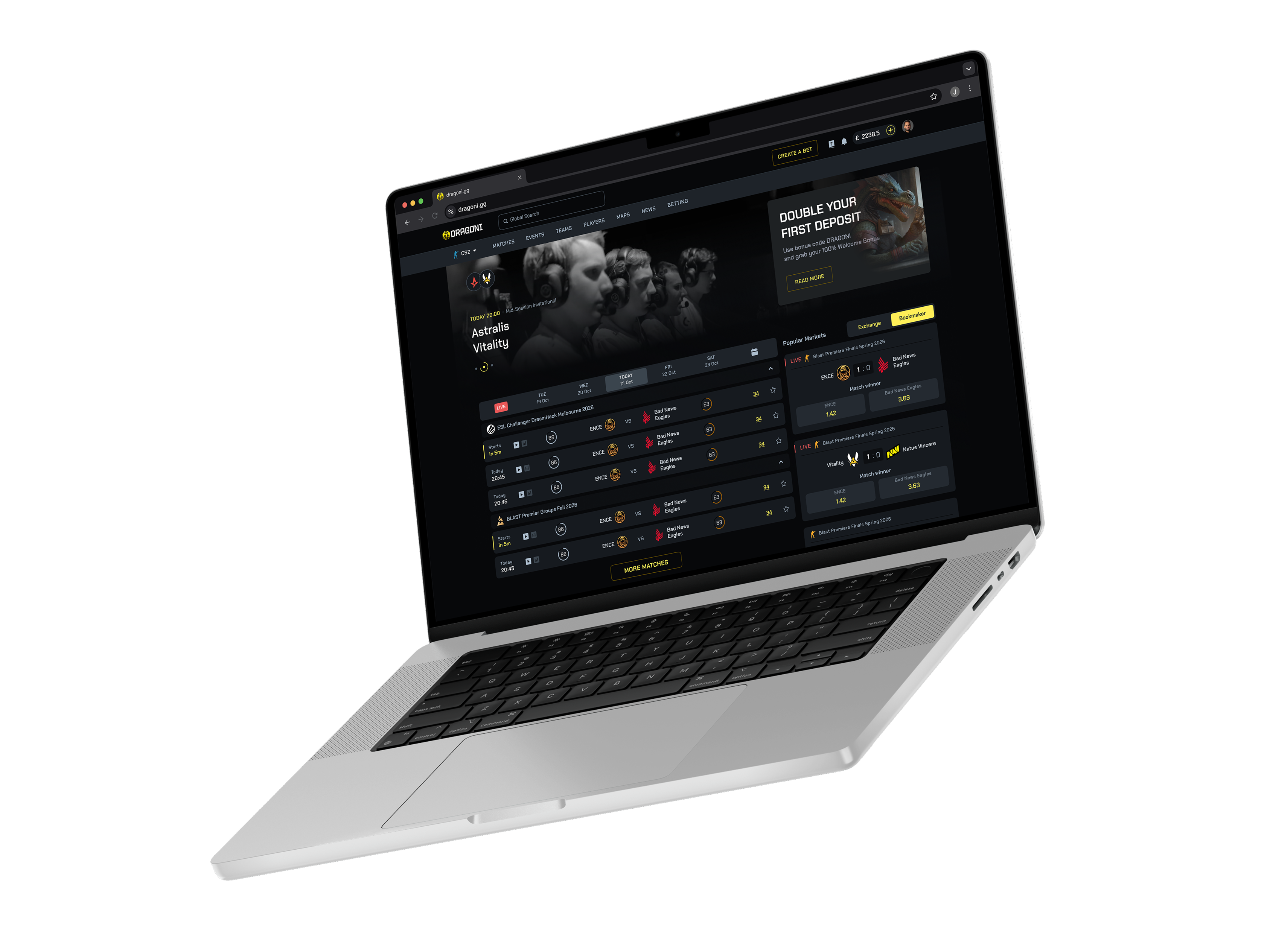
  1. Redesigned Information Architecture

    Redesigned Information Architecture
    • Rebuilt platform hierarchy around explore → create → compete to clarify the core user journey
    • Reduced cognitive load by simplifying navigation and system structure
    RESULT

    Faster discovery and clearer journey comprehension
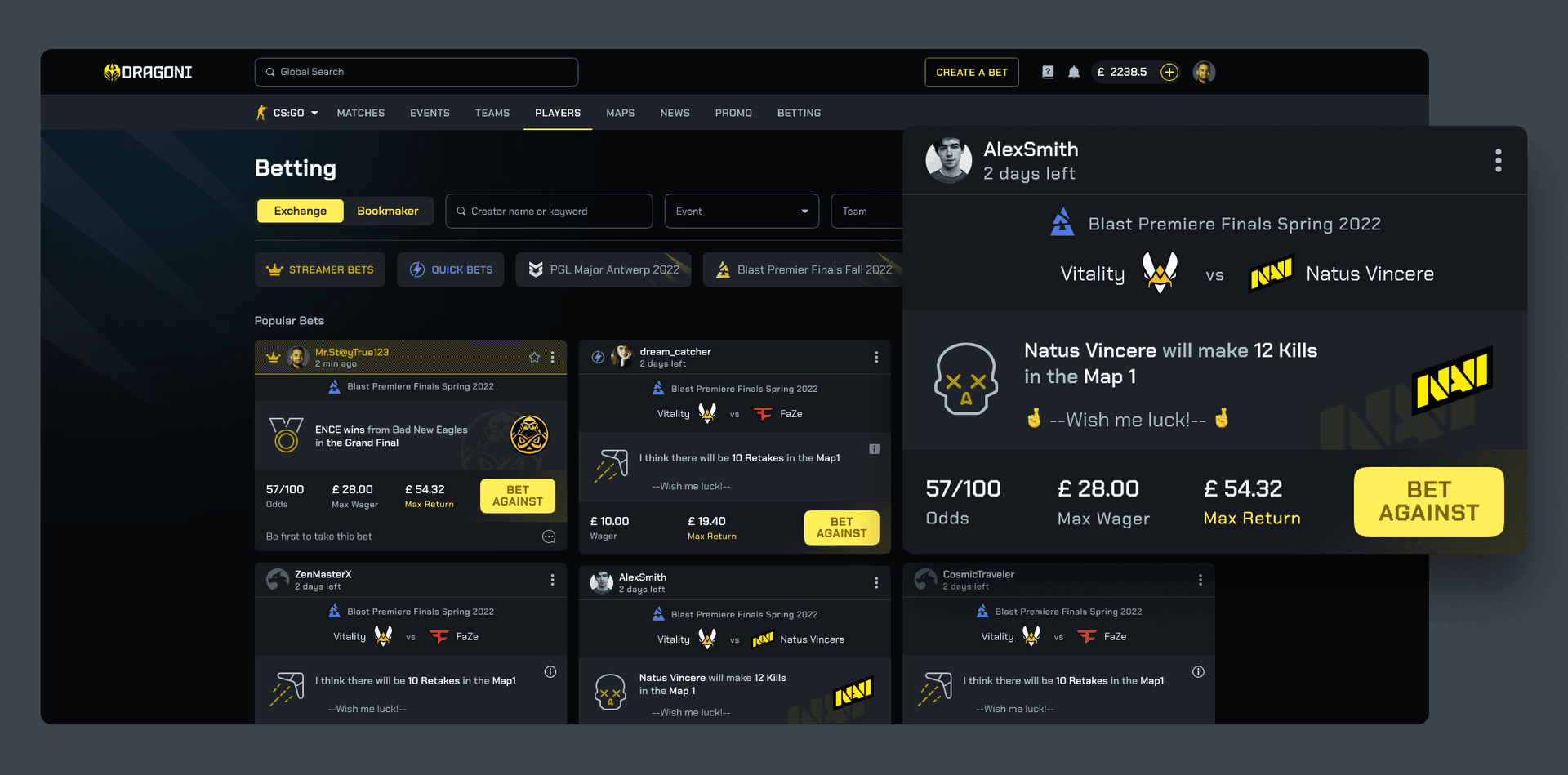
  2. Simplified Betting Flow

    Simplified Betting Flow
    • Designed a low-friction, flexible bet creation experience for multiple scenarios
    • Reduced steps and surfaced complexity only when needed through progressive disclosure
    RESULT

    Faster discovery and clearer journey comprehension
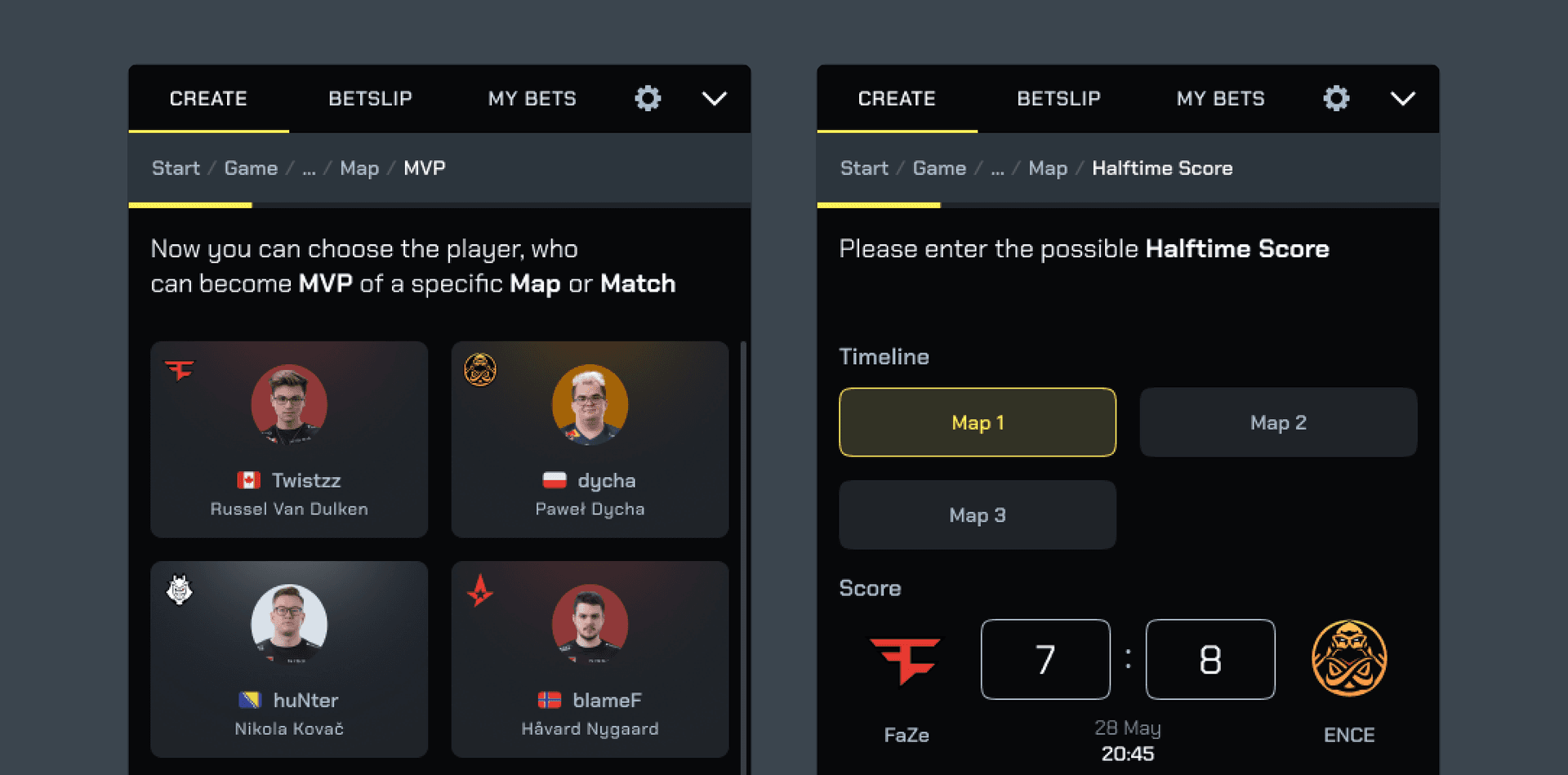
  3. User Flows for Creating, Joining & Managing Bets

    User Flows for Creating, Joining & Managing Bets
    • Covered full lifecycle from creation to joining and managing bets
    • Ensured continuity across states to minimize drop-off between actions
    RESULT

    Improved usability across the full engagement cycle
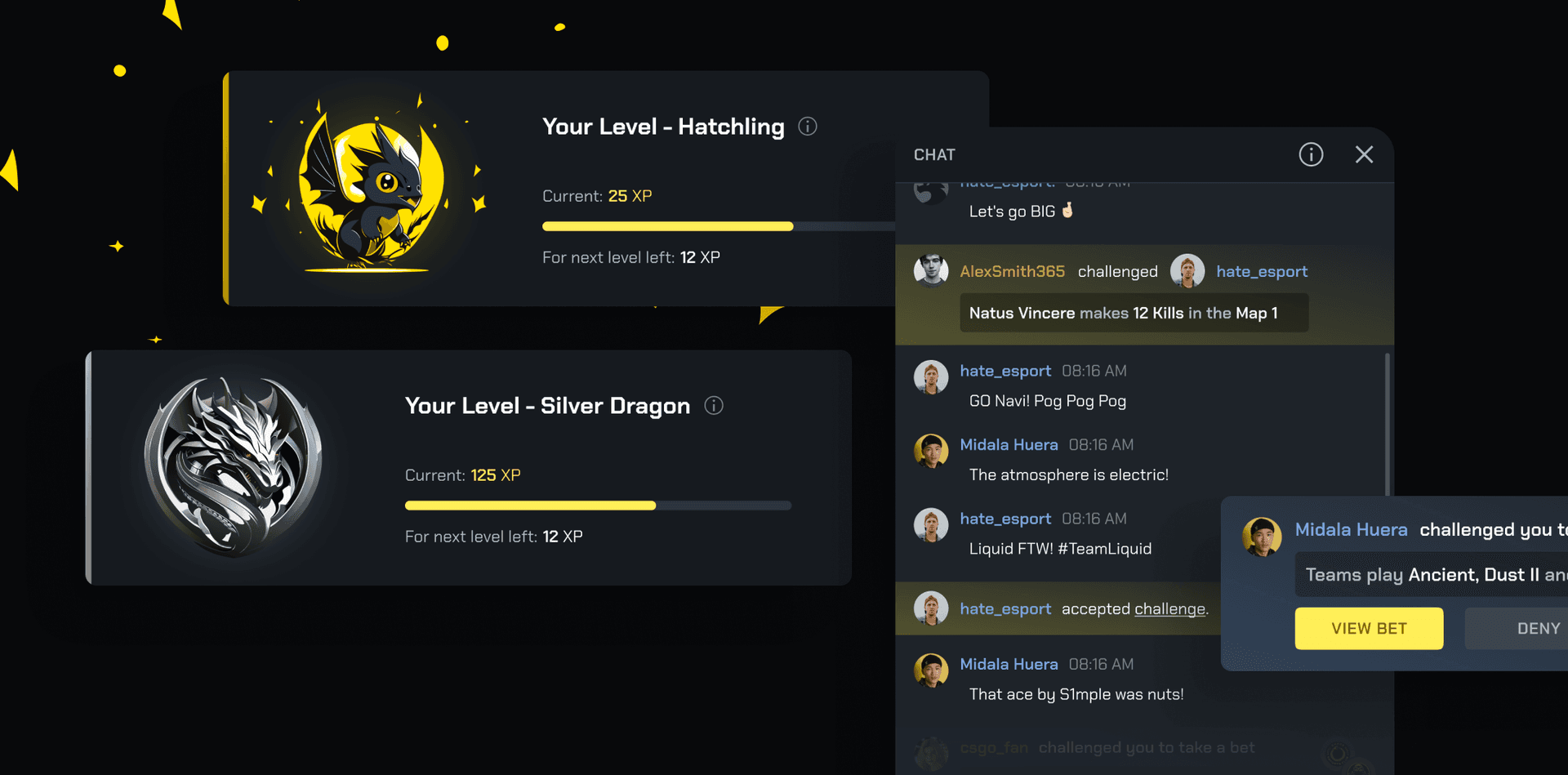
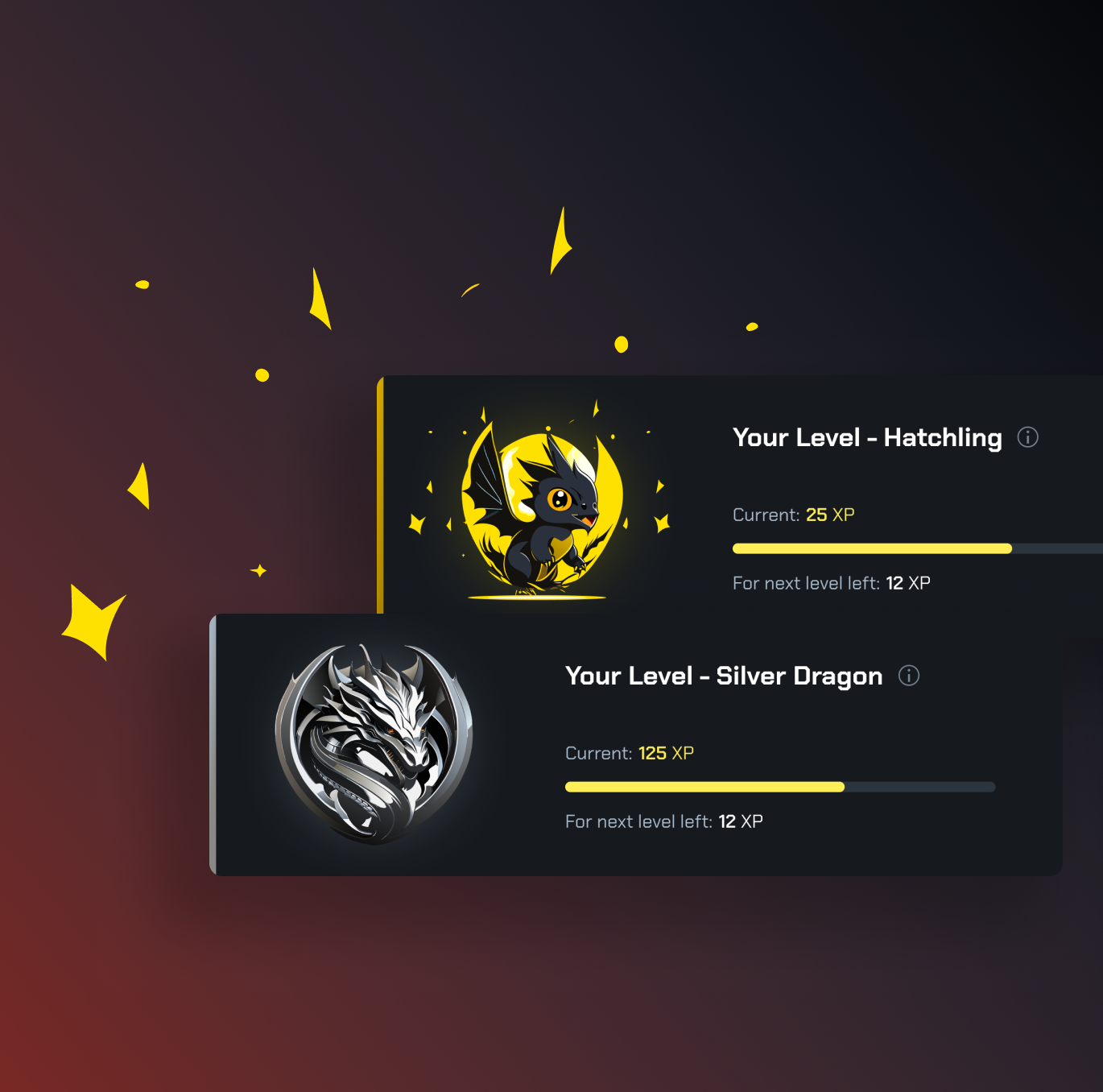
  4. Gamification & Social Mechanics

    Gamification & Social Mechanics
    • Introduced progression, rivalry, and community-driven engagement mechanics
    • Created ongoing motivation beyond individual events
    RESULT

    Stronger retention and repeat engagement
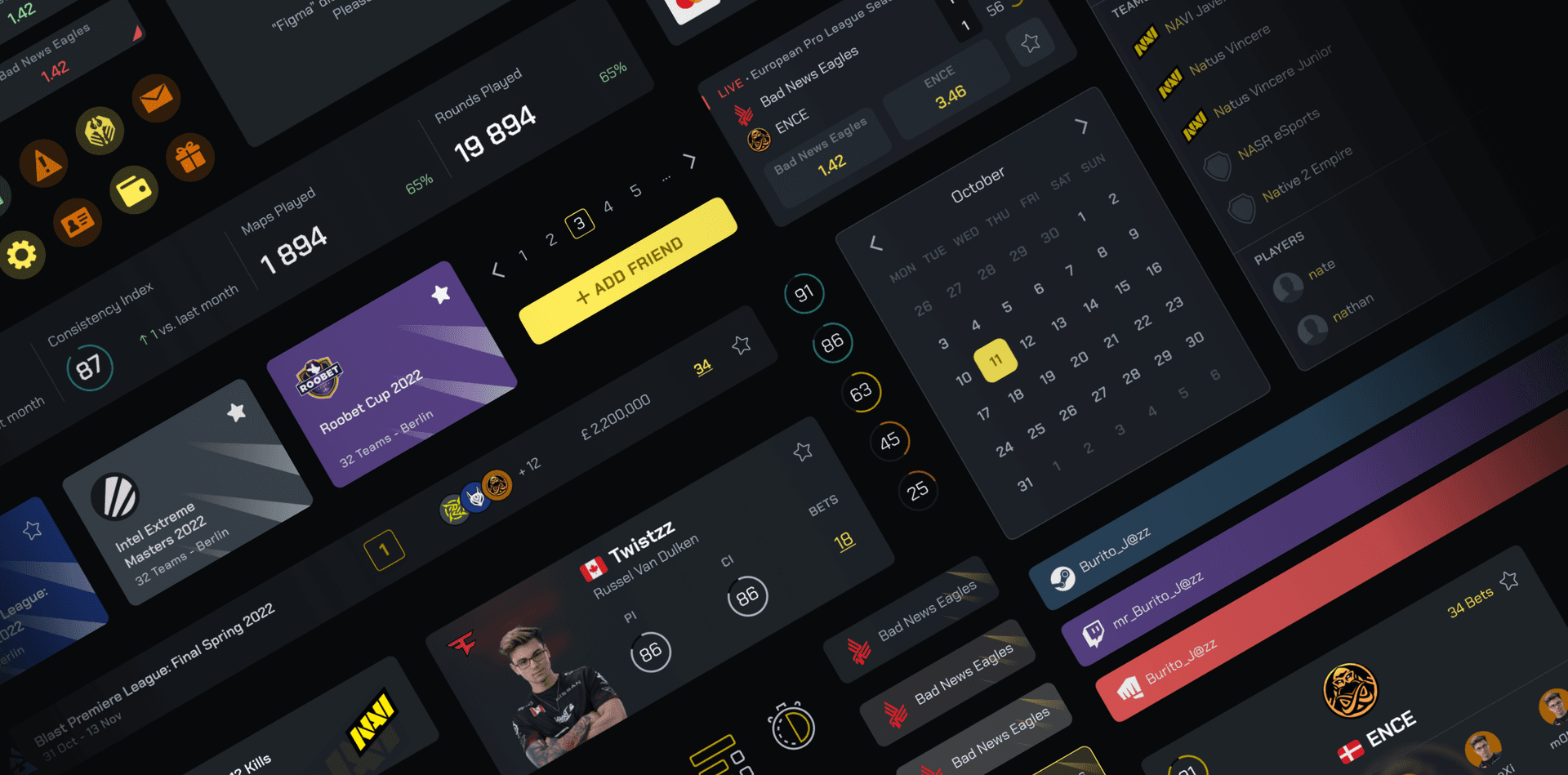
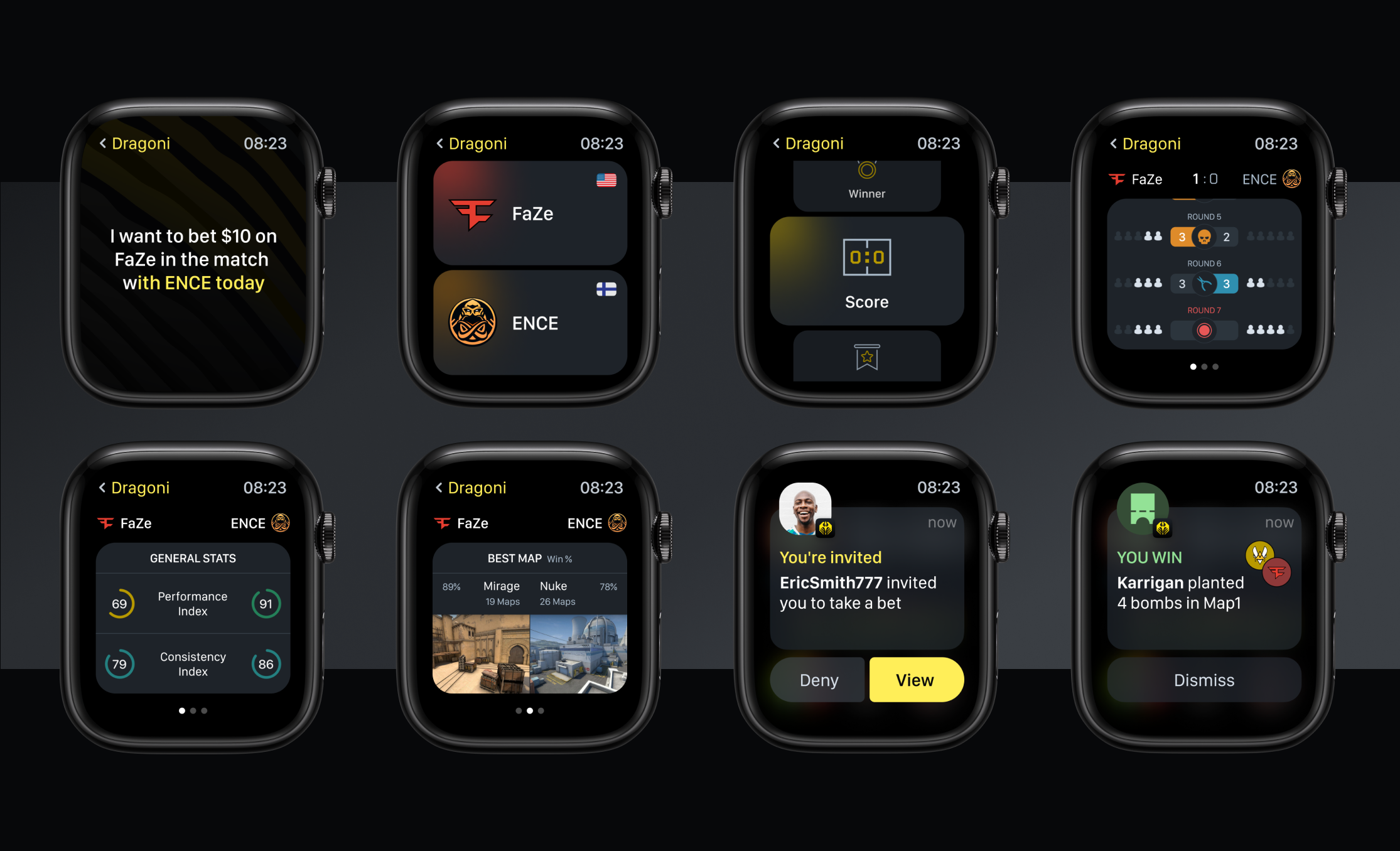
  5. Consistent Cross-Platform Experience

    Consistent Cross-Platform Experience
    • Unified design system across devices and platforms
    • Removed inconsistencies impacting usability and trust
    RESULT

    Improved cohesion, reliability, and user experience

Results

Business impact

01

Higher conversion through reduced friction in bet creation

02

Faster onboarding via clearer structure

03

Increased repeat engagement through gamification and social mechanics

04

Improved trust via cross-platform consistency

05

Scalable foundation for future expansion

[ Technical results ]
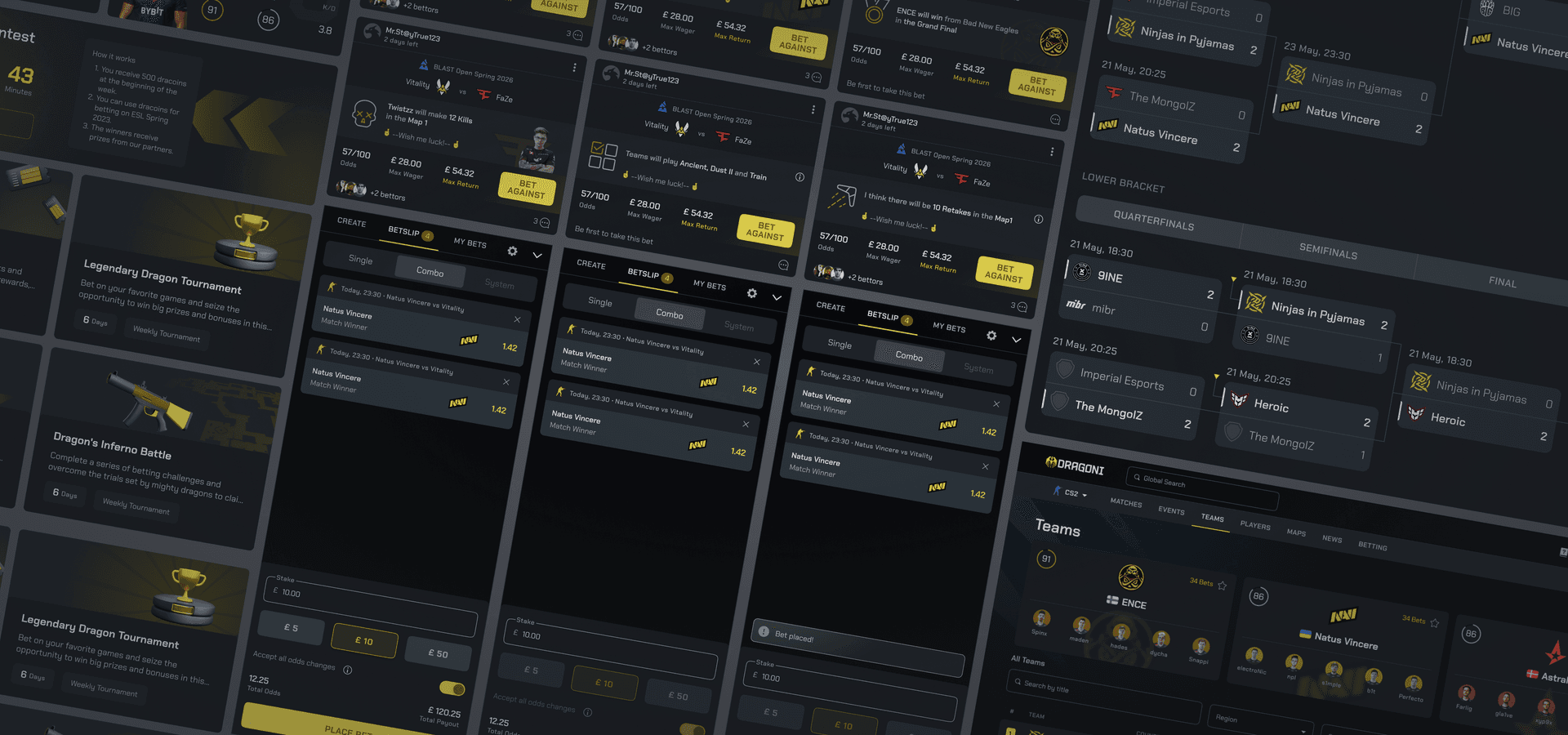
  • Information architecture simplified around core user actions
  • Bet creation flow streamlined across key scenarios
  • End-to-end flows for creating, joining, and managing bets
  • Gamification embedded into the core product loop
  • Unified cross-platform design system implemented

Team and tools

[ TEAM & TECH ]

Delivered by a cross-functional team of frontend and backend engineers, UI/UX designers, and analytics specialists with experience building real-time tools for live streaming environments.

  1. Information Architecture

  2. User Flow Design

  3. UX Strategy

  4. Gamification Design

  5. UI System

  6. Cross-Platform Design

  7. Figma

Related work

[ FEATURED CASES ]

  1. UX/UI for Sportsbook Product

    BamBet - UX/UI for Sportsbook Product

    Redesigned the betting interface - simplifying complex flows and improving usability and conversion.
    • Optimized betting flows and interaction logic
    • Reduced number of steps to complete key actions
    • Improved clarity of odds and user interface
    • Increased usability and conversion potential
  2. Campaign & Data-Driven Platform Development

    GG.BET - Campaign & Data-Driven Platform Development

    Built a system for managing large-scale streamer campaigns and sponsor integrations - turning fragmented processes into a scalable product.


    • Centralized campaign management across multiple streamers
    • Integrated real-time data and reporting systems
    • Automated sponsor banner rotation and delivery
    • Reduced manual operations and improved scalability
    • Enabled consistent execution of multi-streamer campaigns
  3. CS.BET

    Skin Lootbox Platform

    CS.BET - Sportsbook Product Redesign

    Full lootbox platform for the CS:GO skin economy — Steam bot infrastructure, real-time inventory management, and a unique X-ray mechanic.

    • Steam bot infrastructure for real-time item management and player transfers
    • Admin tooling for lootbox creation and drop rate configuration
    • X-ray feature to preview box contents — boosting purchase confidence and revenue
    • Third-party payment integration and automated inventory replenishment
See all case studies

Start with an AI prototype

See how your feature, flow, or idea works in practice — with real logic, data, and interaction.

Turn your idea into a working product concept in 2–3 days — validate logic, features, and user flows before investing in full development.


  1. Align on product structure and scope
  2. Test core ideas with real interactions
  3. Validate before committing budget