Unified data pipeline
combine Twitch, game, and external data sources

Portfolio / Maincast — Real-Time Broadcast Infrastructure for Esports Production

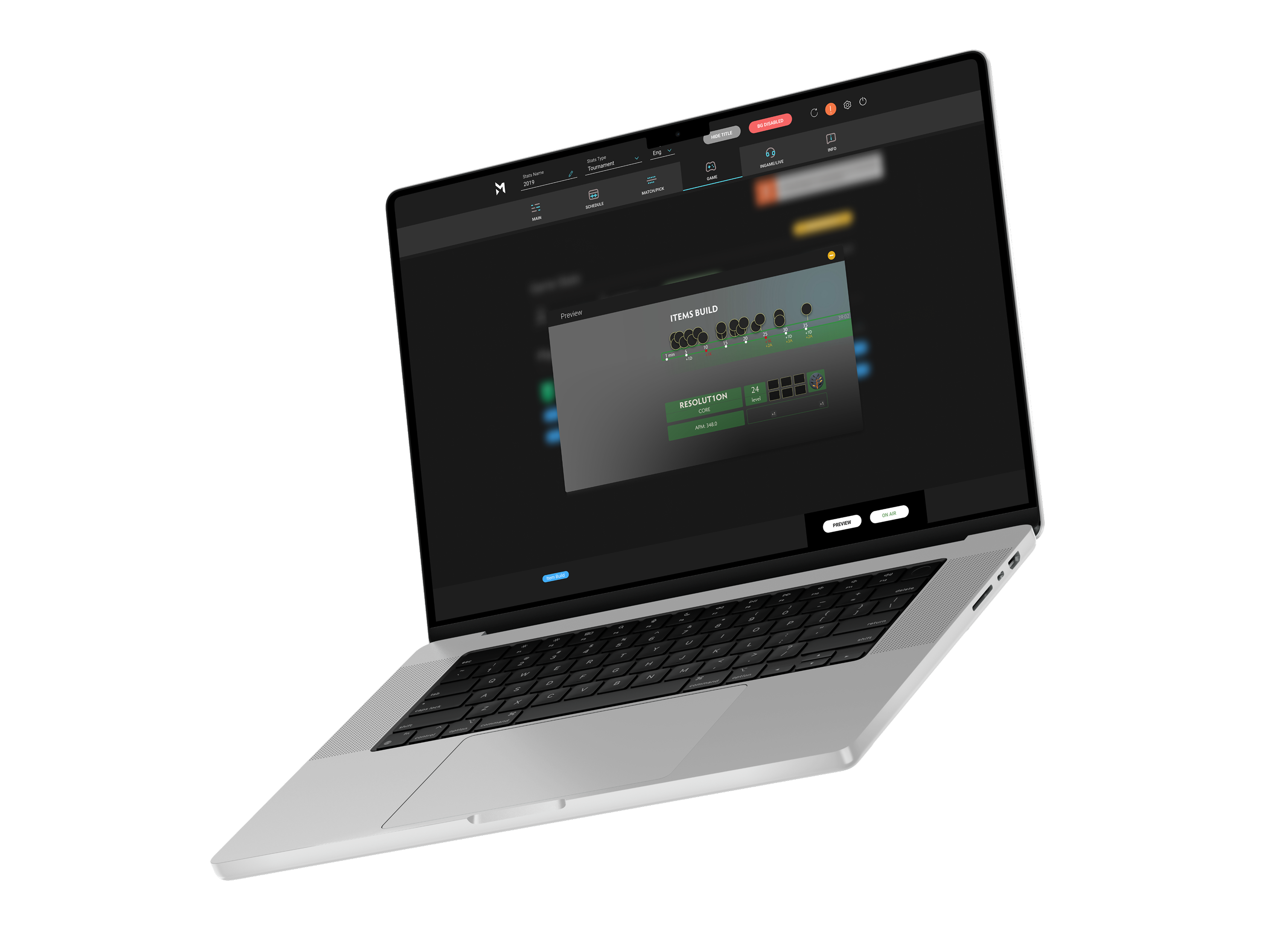
We designed and built a real-time broadcasting infrastructure for Maincast — connecting live game data, Twitch analytics, production graphics, and streaming workflows into a unified esports production system.
Maincast’s broadcast workflow was not built for modern esports production demands:
[ PROBLEM ]
Twitch, game servers, and broadcast systems operated in silos
Commentators had no reliable real-time data during matches
Overlays, captions, and stats required constant manual management
Audiences were restricted to passive viewing experiences
Systems struggled under high-load international broadcasts
Teams relied on manual coordination and workarounds, increasing overhead and reducing broadcast quality.
[ GOAL ]
Build a unified real-time broadcasting system for esports without sacrificing latency or stability:
combine Twitch, game, and external data sources
deliver live analytics for production teams
dynamic, data-driven rendering system
increase engagement through live interaction
ensure performance at large-scale tournaments
We built a production-grade real-time system focused on reliability, sync accuracy, and simplicity for live broadcasts.
defined the full pipeline from data ingestion to on-stream output
combined Twitch, Steam, and external APIs into a low-latency system
ensured stable and consistent broadcast rendering
generated live visuals directly from game event data
tested in real tournament conditions for latency and stability
[ SOLUTION ]
More engaging broadcasts with real-time insights
Instant in-game insights for commentators
Automated graphics without disrupting live production
Perfectly aligned visuals and live data
01
Higher viewer engagement through interactive, data-driven broadcasts
02
Stronger commentary enabled by real-time in-game stats
03
Reduced manual production effort via automation
04
New sponsorship opportunities through dynamic broadcast graphics
05
Modern production stack aligned with top-tier esports standards
[ Technical results ]
[ TESTIMONIAL ]
 Maincast
27 NERDS quickly understood the specifics of live broadcasting and real-time data workflows. They built tools that supported our production team and improved in-stream engagement, without requiring constant explanation or iterations.


[ TEAM & TECH ]
Delivered by a cross-functional team of frontend and backend engineers, UI/UX designers, and analytics specialists with experience building real-time tools for live streaming environments.
[ FEATURED CASES ]

Full-cycle project development — from platform architecture and UX/UI to data systems and AI-driven features.
0K
monthly users
0.00M
Built a real-time overlay system turning gameplay data into live stream engagement.
Created a gamification system that turns passive viewers into active participants through rewards and interactive mechanics.
Full-cycle project development — from platform architecture and UX/UI to data systems and AI-driven features.
0K
monthly users
0.00M
See how your feature, flow, or idea works in practice — with real logic, data, and interaction.
Turn your idea into a working product concept in 2–3 days — validate logic, features, and user flows before investing in full development.