27 Nerds

Portfolio / PBN Project — AI System for Automated Content & Data Publishing

PBN Project — AI System for Automated Content & data Publishing

Company
PbnProject
Duration
12 months
Team
2 members
Product Domain
AI content automation system

Quick project snapshot

We designed and built an AI-driven automated content system that collects, processes, and publishes data across multiple channels — turning raw information from various sources into structured, ready-to-publish content.

Multi-source data collection engine (web, APIs, documents)
01
AI-based content filtering, analysis, and structuring
02
Automated publishing to websites, blogs, and Telegram
03
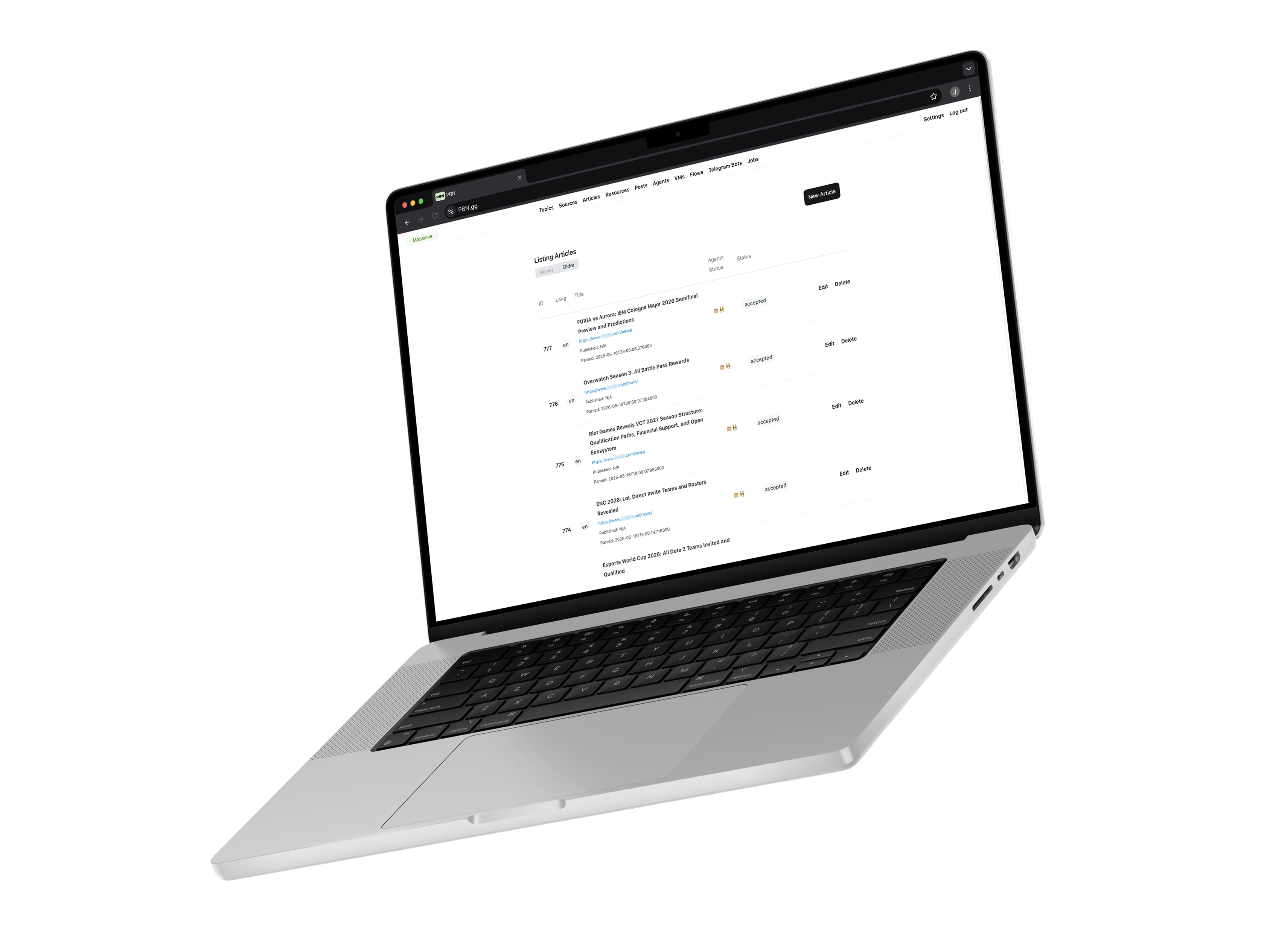
Central dashboard for monitoring and control
04
Scalable architecture for continuous content generation
05

What needed fixing

Content-heavy businesses struggle with scaling manual data workflows and maintaining publishing consistency:

[ PROBLEM ]

  1. Manual curation

    Slow, resource-intensive content processing

  2. Fragmented data collection

    No unified system across sources

  3. Low filtering efficiency

    Difficulty isolating high-quality information

  4. Limited automation

    Weak structuring and publishing workflow

  5. High operational cost

    Expensive continuous content production

  6. Low pipeline visibility

    No centralized control or oversight

The result was fragmented workflows and limited scalability.

What we aimed for

[ GOAL ]

  • Multi-source data ingestion

    continuously collect structured and unstructured data

  • AI-driven filtering

    extract relevant insights automatically

  • Content structuring

    transform raw data into publish-ready formats

  • Automated distribution

    publish across multiple channels

  • Centralized control layer

    enable monitoring and manual overrides

How we solved it

We designed the system as a modular AI-powered pipeline with clear separation between ingestion, processing, and publishing layers.

[ Key principles ]
  • [ 01 ]

    Multi-source ingestion layer

    APIs, websites, and document-based data collection

  • [ 02 ]

    AI processing agents

    filtering, classification, and content enrichment

  • [ 03 ]

    Structured transformation pipeline

    converting raw data into publish-ready formats

  • [ 04 ]

    Automated publishing system

    distribution across CMS, blogs, and Telegram channels

  • [ 05 ]

    Centralized control dashboard

    monitoring, tuning, and system-wide oversight

What we built

[ SOLUTION ]

Data Collection Engine

  • Multi-source ingestion system (web, APIs, documents, databases)
  • Continuous monitoring of selected content sources
RESULT

Always-on data acquisition pipeline

AI Processing Layer

  • AI agents for filtering, analysis, and content structuring
  • Relevance scoring and content enrichment logic
RESULT

Automated transformation of raw data into usable insights

Publishing Automation System

  • Auto-publishing to websites, blogs, and Telegram channels
  • Format adaptation per distribution channel
RESULT

Fully automated content distribution workflow

Monitoring & Control Dashboard

  • Central interface for tracking system activity and outputs
  • Manual override and content adjustment capabilities
RESULT

Full operational visibility and control

Scalable Architecture Layer

  • Modular system design for adding new data sources and tools
  • Optimized for high-volume data processing
RESULT

Flexible and future-proof content infrastructure

Results

Business impact

Eliminated manual content creation and publishing workload

Increased speed and consistency of content output

Improved relevance and quality through AI-driven filtering

Enabled scalable, always-on content generation system

Reduced operational cost of content production workflows

[ Technical results ]

  • Fully automated end-to-end content pipeline implemented
  • Multi-source ingestion system operational across web and API inputs
  • AI agents handling filtering, analysis, and content structuring
  • Automated publishing to multiple distribution channels
  • Centralized monitoring dashboard with manual control options

Team and tools

[ TEAM & TECH ]

Delivered by backend engineers and AI specialists focused on automation systems, content pipelines, and scalable data infrastructure.

  1. WordPress

  2. AI Agents

  3. Automation Pipelines

  4. API Integrations

  5. Data Processing Systems

Related work

[ FEATURED CASES ]

  1. All-in-One Esports Platform

    Bo3.gg - all-in-one esports platform showcase

    Full-cycle project development — from platform architecture and UX/UI to data systems and AI-driven features.

    0K

    monthly users

    0.00M

    page views
    0M+
    engagement rate
    0%
    CTR
    0.0%
    countries
    0+
  2. AI-Powered Market & Content Intelligence System

    NicheIQ - AI-Powered Market & Content Intelligence System

    Built an AI system that identifies high-potential niches and content opportunities — turning fragmented search and platform data into structured, actionable strategy insights.

    • Automated niche discovery based on search trends and competition signals
    • AI-powered keyword and content analysis across multiple data sources
    • Continuous processing to surface emerging opportunities in real time
    • Structured outputs for SEO, content strategy, and product direction
  3. Automated Game Prediction System

    goPredict - Automated Game Prediction System

    Built a real-time prediction system for streamers — generating interactive viewer challenges automatically from live game events, with zero interruption to gameplay.

    • Automated prediction generation triggered by real-time in-game events
    • Live data integration for instant resolution and outcome tracking
    • Voice activation and zero-click interaction keeping streamers in the game
    • Cross-platform architecture built for Twitch, YouTube Gaming, and Kick
See all case studies

Start with an AI prototype

See how your feature, flow, or idea works in practice — with real logic, data, and interaction.

Turn your idea into a working product concept in 2–3 days — validate logic, features, and user flows before investing in full development.


  1. Align on product structure and scope
  2. Test core ideas with real interactions
  3. Validate before committing budget